About the Project
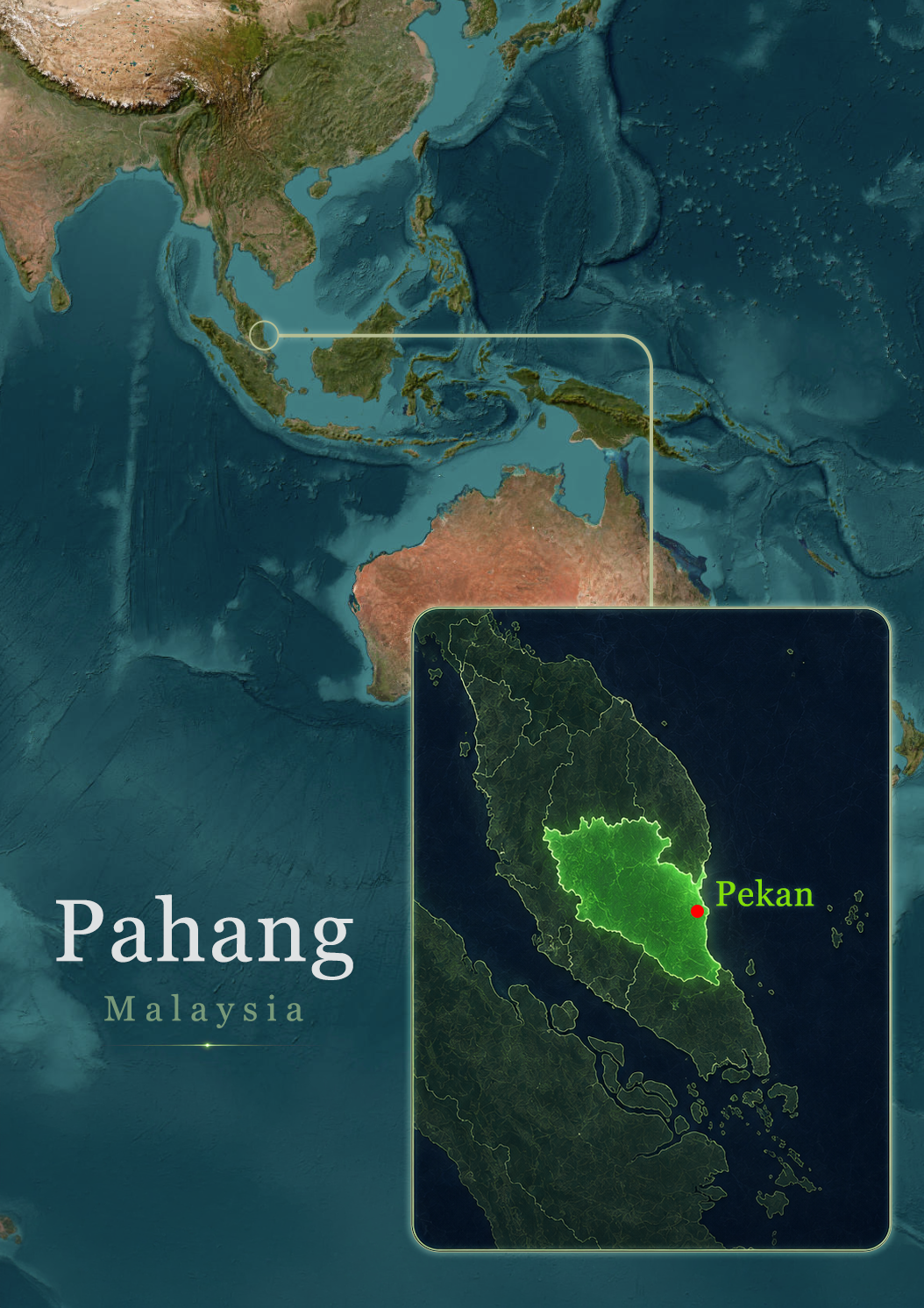
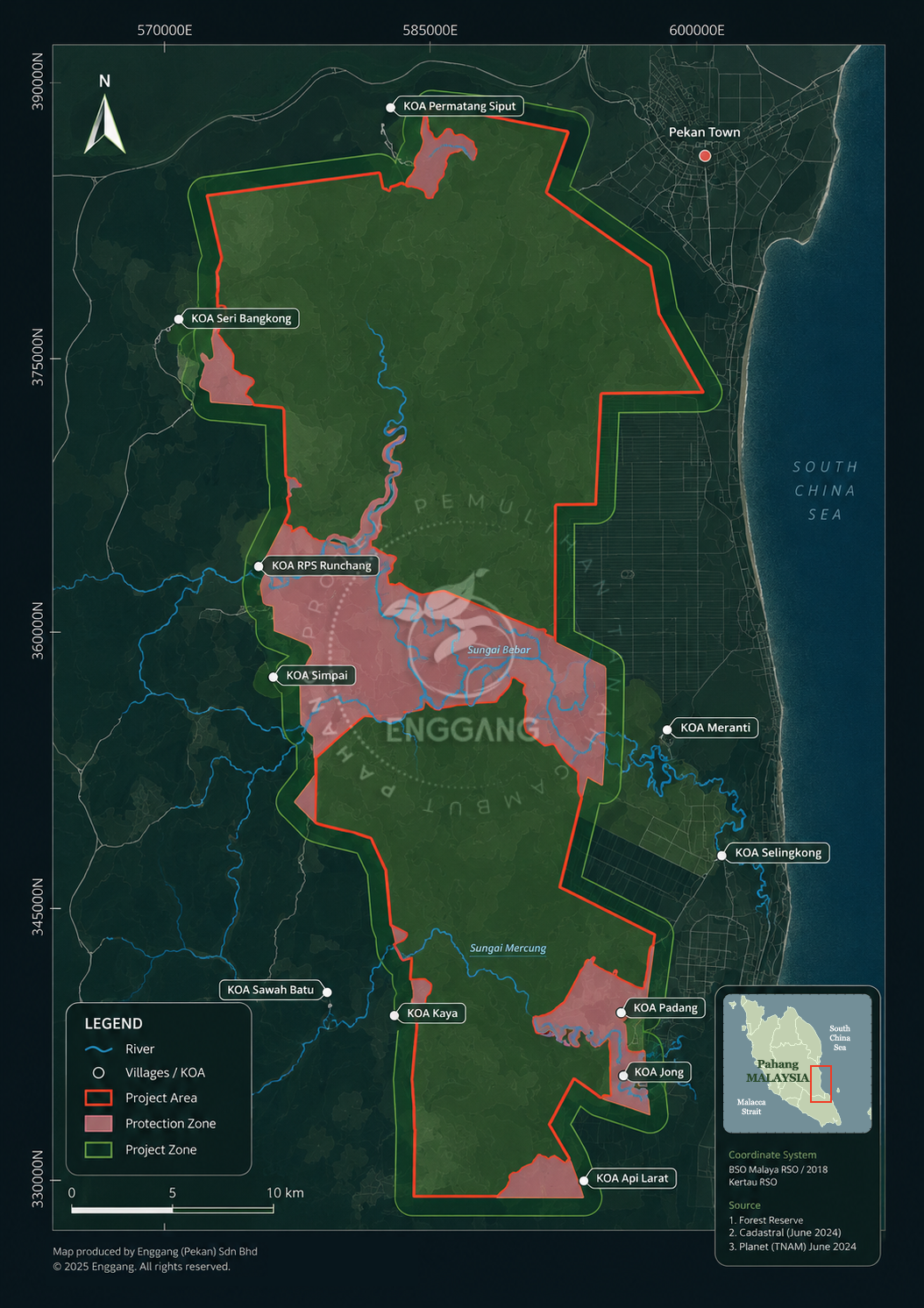
The Pahang Peatland Restoration Project (PPRP) conserves and restores 96,569 hectares of peatland and alluvial marshland in Pahang — the largest contiguous peat and wetland ecosystem in Peninsular Malaysia. The project’s initial phase covers 74,772 hectares across several timber production forest reserves, with core objectives spanning climate change mitigation, sustainable livelihoods for local communities, and biodiversity protection.
The project area sits at the intersection of urgent conservation needs and extraordinary ecological value. Ongoing deforestation, degradation, and wetland destruction continue to threaten a landscape that supports at least 29 species listed on the IUCN Red List of Threatened Species, including four Critically Endangered (CR) and 13 Endangered (EN) species, such as the Raffles’ Banded Langur, Sunda Pangolin, Ramin Melawis, Meranti Paya, Flat-headed Cat, Hairy-nosed Otter, and Wrinkled Hornbill.
By protecting existing habitat and actively restoring degraded and deforested areas, PPRP will improve ecological connectivity and carrying capacity across what has become an increasingly fragmented wetland landscape — creating the conditions for the long-term recovery of species that exist nowhere else in comparable density.
Project Design and Evaluation
PPRP is designed and certified against two of the voluntary carbon market’s most rigorous frameworks: the Verra Verified Carbon Standard (VCS) and the Climate, Community and Biodiversity Standards (CCB).
The project is structured to achieve CCB Triple Gold Level — the highest tier of recognition under the CCB Standards — reflecting the exceptional quality of its climate, community, and biodiversity outcomes.
Certification under these standards provides independent validation of the project’s scientific integrity and enables the generation of Verified Carbon Units (VCUs), creating a long-term, market-based revenue stream that underpins the project’s financial sustainability.
The project applies three VCS-approved emission-reduction activities across its landscape:
- Reducing Emissions from Deforestation and Degradation (REDD+) — VM0007
- Wetland Restoration and Conservation (WRC)
- Afforestation, Reforestation and Revegetation (ARR) — VM0047
Impact Highlights
Area Size: 96,569
hectares of wetland, peat swamp forest, and two rivers protected.
Climate Benefits: 186 million tonnes of CO₂ equivalent avoided, reduced, and removed.
Employment: 80 full-time equivalent (FTE) jobs created, with ~25% held by women.
Community Capacity Building: 18,900 people trained, with 50% female participation.
Water & Health Benefits: Improved water quality for around 3,200 people; improved health services for about 3,900 people.
Forest Status: Previously degraded, now undergoing hydrological restoration and reforestation.
Biodiversity: Habitat for at least four Critically Endangered and 13 Endangered species protected.
RANOK KITA
A Story of the Community
This is a story of the people who have long called this land home — whose strength, wisdom, and quiet dedication remain at the heart of peatland restoration.
Recognition
PPRP has been selected as a flagship project by the IUCN’s WALD Innovation Facility — chosen from a competitive field of nearly 200 applicants globally.
The WALD – Innovation Facility, implemented by IUCN and funded by German Cooperation via KfW, aims to scale up ambitious approaches that attract private investment, mitigate climate change, and benefit biodiversity and livelihoods. It also supports innovative tools to better measure and monitor positive impacts on nature.
The Facility recognised PPRP’s exceptional potential to deliver biodiversity and community co-benefits and is providing two years of early-stage financing and technical support from 2025 to 2027.
Supported by:
Implemented by: